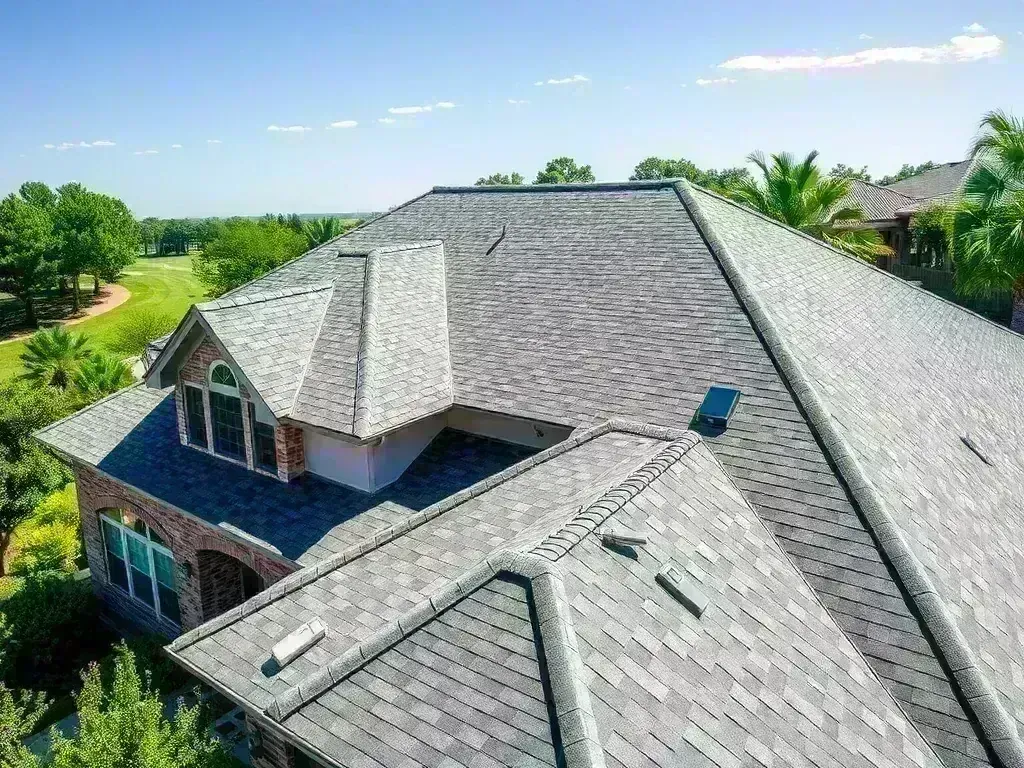
Installing a skylight means cutting through shingles, sheathing, and the roof deck, then framing a curb square to the rafters so the unit sits flat and drains.
We line that opening with ice-and-water shield and synthetic underlayment, run step flashing up both sides, and set counter-flashing so water sheds the way it did before we touched it.
Velux and Solatube units both hold up here. Fixed skylights cost less up front, and vented skylights pull humid air out of a bathroom before it feeds mold in the framing.
- A skylight needs the right sealant for salt air, because cheap caulk flakes and lets water wick into the insulation.
- Local building code sets curb height and flashing detail, so we build the roof estimate and the roof inspection around those rules.
- We match the flashing kit to the surface: asphalt shingle, architectural shingle, three-tab shingle, wood shake, cedar shake, slate, clay tile, concrete tile, standing-seam panel, or corrugated panel.
- Solar-powered blinds cut heat gain through the glass, which takes some load off the attic fan and the roof ventilation.
- A waterproof seal only holds if the deck under it is sound, so rotten plywood or OSB at the opening gets replaced before anything goes back on.
- A straight swap of an existing unit usually finishes in a day, while a fresh cut into a vaulted ceiling runs longer.
- If the attic already runs hot and the shingles show end-of-life wear, refitting the field course first saves you from cutting twice.
- A skylight above a porch canopy or awning needs extra care at the rake and the eave overhang, where wind drives rain sideways.
Here is how a day on your roof usually runs, and the warning signs that mean you should call before the next Nor'easter.
- A drip at the chimney flashing or a ceiling stain usually means one seal failed, not that the whole field course is gone.
- Granule loss, curled shingles, and a soft spot near the opening point to rot in the sheathing underneath.
- We set ladders and scaffold in the morning, protect the beds below, and stage a dumpster so tear-off debris leaves with us.
- The cut is marked with a roofing square and opened with a pry bar, never a blind saw cut through a rafter or ridge beam.
- New flashing, fresh mastic, and roof cement go down before the glass, and we hand-seal every lap.
- Snow guards, anchors, and vent boots get added on the same visit when your pitch calls for them.