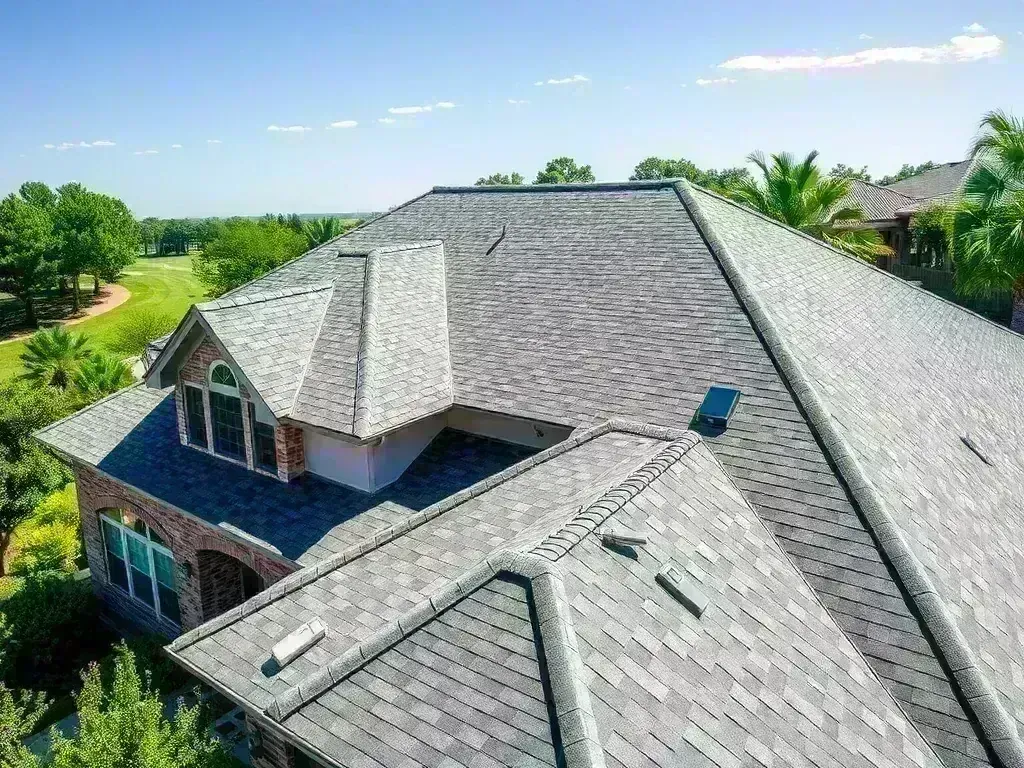
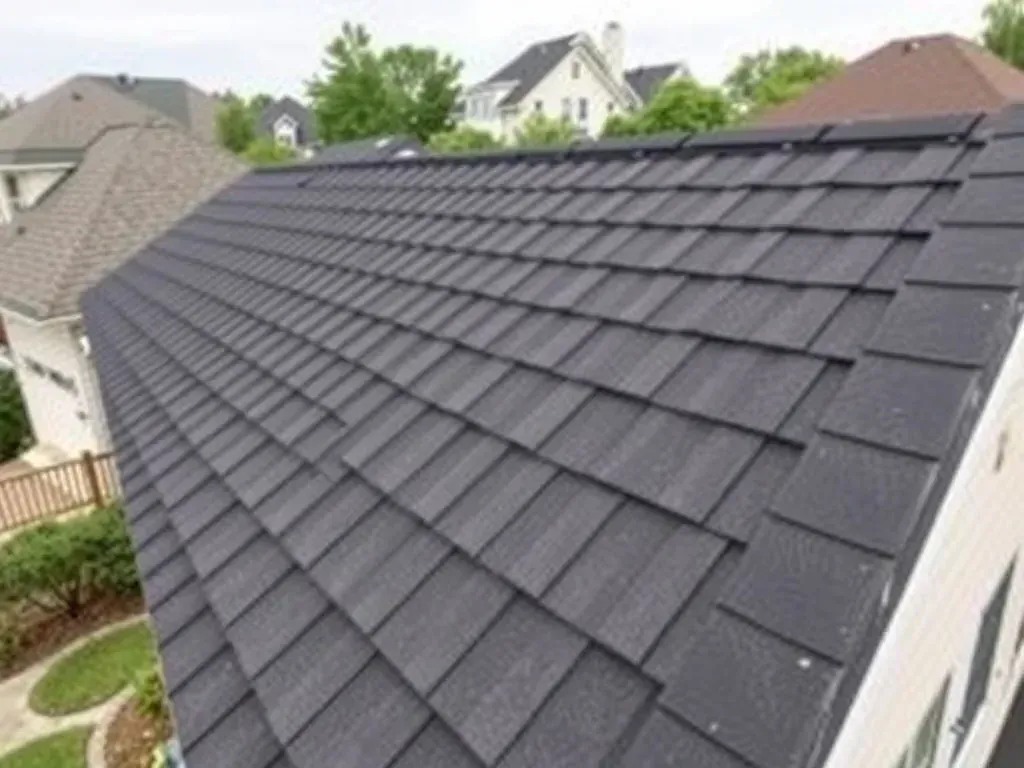
Insurance claim assistance means we handle the claim documentation for your storm damage, sit with the adjuster on your rooftop, and defend every line of the scope of work until the numbers match real repair cost.
We assemble that file with drone photo packages, Xactimate scope documentation, and ITEL shingle sampling when matching an older three-tab shingle or architectural shingle is in dispute.
A roof inspection comes first, because wind damage and hail damage have to be tied to a date of loss your policy coverage recognizes. Most storms here leave bruises you cannot see from the ground.
Here is what a complete claim file looks like when we turn it in.
- Claim documentation that pairs your storm damage photos with the date of loss and that day's weather report.
- A written roof estimate built line by line, so the adjuster sees replacement cost instead of a lump sum.
- ITEL shingle sampling when the carrier argues your asphalt shingle type is discontinued and will not match.
- Drone photo packages covering the full rooftop, the roofline, every valley, and any steep pitch a ladder cannot safely reach.
- A tarp and mitigation invoice when emergency roof repair was needed to stop water intrusion before the claim was filed.
- A supplement request when hidden rot, decay, or a rotted roof deck turns up once the tear-off starts.
- Proof of loss forms completed correctly and on time, with figures your policy coverage actually supports.
- Depreciation recovery language so recoverable depreciation is released once the work is complete and invoiced.
Deductible and depreciation are the two numbers homeowners ask about most. You pay the deductible, the carrier holds back depreciation, and we file the paperwork that gets it released.
If a soft roof deck or rotted sheathing shows up after the tear-off, we supplement the claim and re-photograph the plywood or OSB. That is how replacement cost gets closer to what the job truly costs.
We also handle mitigation. If water is still coming in, we tarp the roof that day and document the emergency repair so the invoice belongs to the claim instead of becoming an argument.
Materials matter after a payout, because a cheap patch just means another claim later. In this salt-air climate, we lean toward systems that survive humid summers and nor'easter wind.
- Synthetic underlayment, since standard roofing felt and tar paper break down faster in humid air.
- Ice-and-water shield along the eave and valley, where an ice dam can push water up under the field course.
- Architectural shingle with a heavier mat, which handles granule loss better than a three-tab shingle near salt water.
- Standing-seam panel or corrugated panel on low-slope sections where shingle will not hold.
- EPDM, TPO, or PVC membrane for flat roofing and parapet details over additions and porches.
- Modified bitumen or built-up roof where an older tar and bitumen assembly is still in service.
- New drip edge, rake trim, and fascia boards wherever old metal has peeled, flaked, or spalled.
- Step flashing and counter-flashing reset at sidewalls, with chimney flashing and pipe boot collars replaced rather than caulked.
- Ridge cap, ridge vent, and soffit vent balanced together so attic ventilation actually moves air.
- Snow guards on north-facing slopes and a vapor barrier in the attic to slow condensation.
- Gutter and downspout sizing checked against roof square footage so runoff clears the fascia, not the foundation.
Not every roof needs a claim. If the only problem is a worn pipe flashing or a lifted starter course, a repair costs less than your deductible and we will say so plainly.