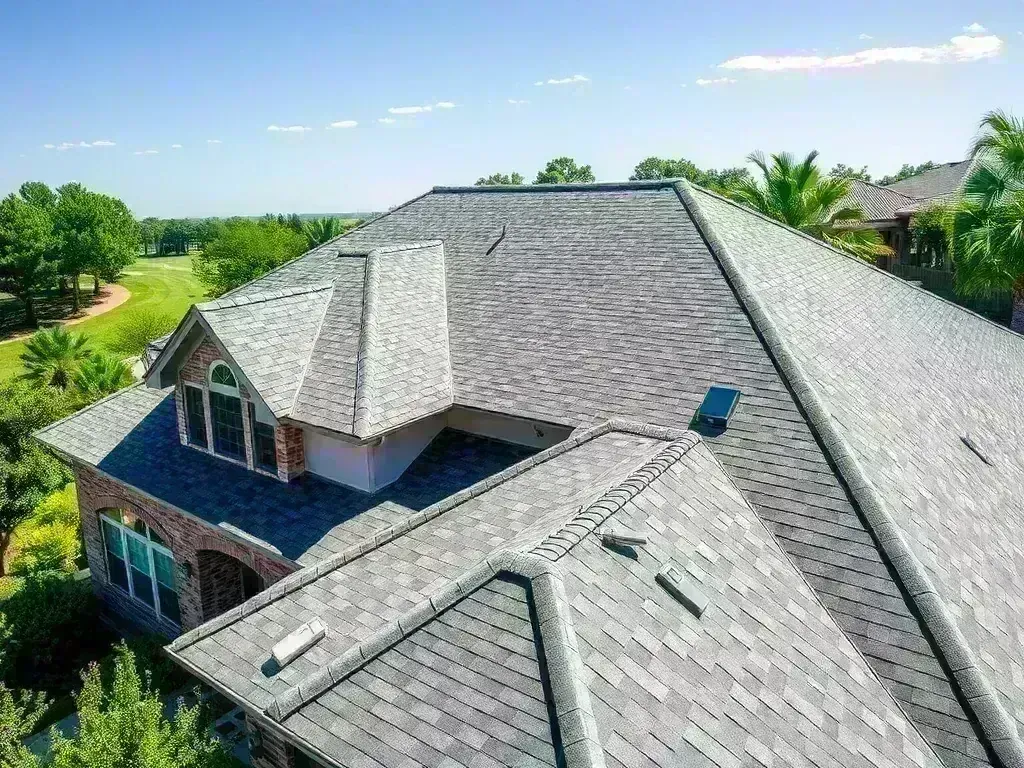
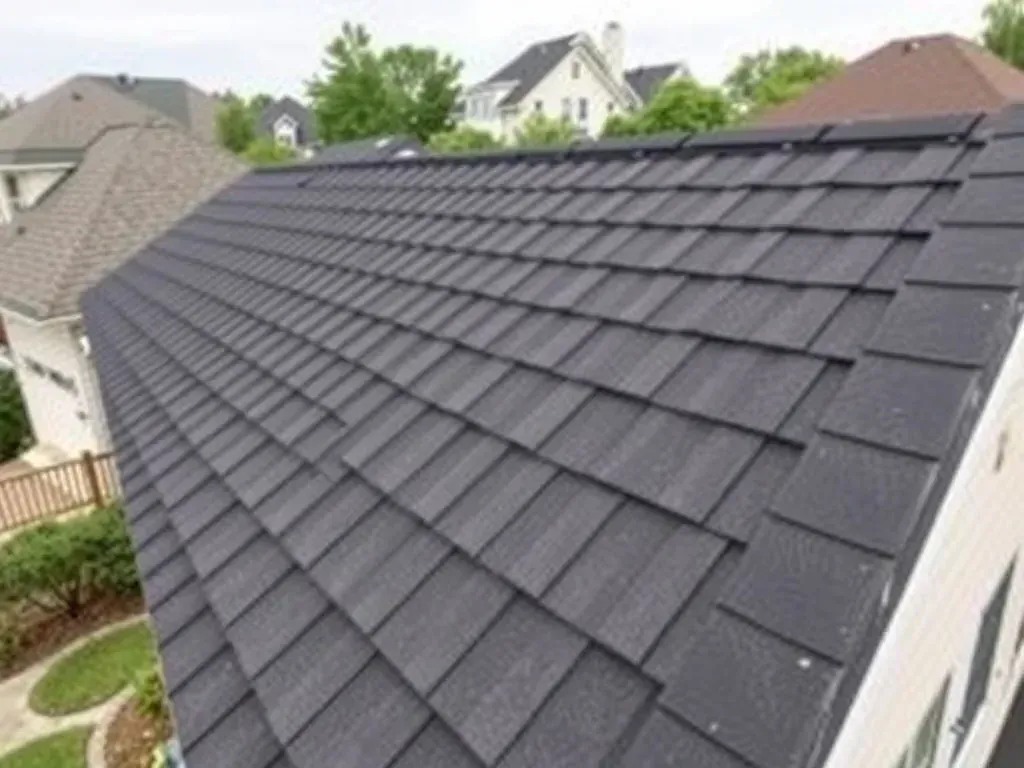
Storm damage repair starts with a rapid roof inspection of the deck, sheathing, and rafters. We walk the roof to find punctures, missing shingles, wind uplifts, and granule loss before anyone orders material.
The same day, we tarp the open area and nail it down with ring-shank nails so a passing shower cannot get through. Tarps and a written scope buy time while the insurance claim is documented and an adjuster schedules a visit.
Water rarely enters where you see the stain. It seeps under the flashing, wicks along the underlayment, and drips through a ceiling light two rooms from the actual break.
Wind-driven rain from a Nor'easter gets under the step flashing at a sidewall, past the drip edge at the eave, and into the valley where two roof planes meet.
We replace the chimney flashing, the pipe boot, and the counter-flashing with new metal, then hand-seal every fastener head with mastic or roof cement instead of smearing caulk over rust.
Hail bruises shingles differently than wind does. Asphalt shingle, architectural shingle, and three-tab shingle all lose granules on impact, and the mat cracks and flakes months later when heat hits it.
Wood shake and cedar shake split along the grain, slate cracks at the fastener hole, and clay tile or concrete tile spalls at the surface. Each takes a different patch method and a different disposal plan.
Metal panel roofs dent under hail and back out at the screw line. We reset standing-seam panel and corrugated panel with new screws, then check the substrate underneath for corrosion, since a batten or counterbatten grid keeps panels from rattling loose.
Low-slope sections fail differently. Membrane, TPO, EPDM, and PVC membrane seams pull apart, while an older built-up roof loses its tar and modified bitumen layers to ponding water. Where a torch is permitted, we set the bitumen with heat.
Underlayment choice decides how long a repair holds. Synthetic underlayment has replaced roofing felt and tar paper on most jobs, because it resists tearing when a second storm arrives before the work is finished.
Ice dam buildup at the eave is the winter version of the same problem. We follow the local building code for ice-and-water shield coverage, a self-adhered sheet that seals around every nail.
Gutters and downspouts are part of the repair, not an upsell. A gutter peeling off the fascia lets water soak the soffit, rot the eave, and pool against the foundation.
Ridge and ventilation work together. Lose the ridge cap or the ridge vent to wind and attic ventilation fails, so insulation and the roof deck stay damp. A vapor barrier under insulation keeps that moisture out, and a soffit vent pulls air in.
An attic fan helps move that air, but it cannot fix a roof that is already leaking.
Skylights, dormers, and parapet walls are where we find hidden leaks most often. The same goes for a chimney, a pipe flashing, or a boot flashing collar that has dried out and cracked.
Inside the attic we check the truss and ridge beam for sag, look for a joist or rafter that has pulled loose, and note any purlin that no longer bears on a wall.
On the rooftop, our crew uses a roofing square, a pry bar, and a roofing shovel for the tear-off, while a nail gun and air compressor are set up for the starter course and field course. Roof pitch drives labor more than most people expect.
We lay courses in a staggered pattern and back-nail the field course on steep pitch, since a face-nailed shingle lifts in high wind. An overdriven fastener breaks the mat and starts a leak.
We stage a dumpster on the driveway, strip the old substrate and decking, and haul the debris in one trip. Soft roof deck gets cut out, so new plywood or OSB sheathing goes down before the next layer.
Adhesive and sealant selection is not guesswork. We match the sealant to the substrate, use a compatible adhesive under each termination, and add a reflective coating on flat sections to slow UV wear.
Waterproofing details decide whether a repair lasts. We rework the verge, hip, gable, rake, and overhang, then reseal the apron flashing where it meets the chimney.
A snow guard stops sliding snow from shearing the gutter on a mansard or gambrel roof. A scupper and coping handle drainage where a rooftop meets a flat section, and weatherproofing there matters as much as on the roofline.
Small canopy and awning roofs over a side door take the same wind uplift as the main roof. We inspect them on the same visit, because they are usually the first thing to peel.
As a licensed and insured Middletown roofing contractor, we keep every repair in-house. The roofer who writes your roof estimate is on the roof when the work happens.
A free roof inspection takes about an hour on a typical house. We photograph the damage, mark it on a diagram, and hand you a line-item estimate you can send to your insurer.
Safety comes before production. We set scaffold and ladder access before the first bundle goes up, and every person on the roof is tied off to an anchor in a safety harness.