A gutter installation replaces worn runs, hangers, and downspouts with new material measured to your roofline. We check the eave line, the fascia, and the soffit for rot before we order anything.
New gutters hung on soft wood sag within a season, so we replace damaged fascia boards and reseal the drip edge where water leaves the roof.
Sealant and flashing at every joint keep runoff inside the channel instead of behind it, where it wicks into the sheathing and stains the interior.
Half-round copper costs more and suits the Victorian-era homes near the waterfront, where it outlasts aluminum by decades.
Downspout sizing matters more than color does.
A 2x3 downspout on a long run backs up during a Nor'easter, while a 3x4 carries the same volume without overflowing at the elbow.
Discharge has to meet building code and land well away from the foundation, or you trade a water problem for a wet basement and a washed-out flower bed.
- Five-inch and six-inch K-style aluminum is formed on site, so a run has joints only at corners and outlet points.
- Half-round copper is the upgrade that suits Victorian-era homes near the waterfront, where it holds a patina instead of peeling.
- Leaf guards such as Gutter Helmet and LeafFilter keep pine needles and shingle grit out of the trough, which cuts your cleanouts to once a season.
- Downspout extensions carry discharge past the foundation and into a drywell or splash block, so the grading does not get undermined.
- A bonded factory coating on aluminum resists the salt air off Sandy Hook Bay that dulls bare metal in a couple of seasons.
- Hidden hangers driven with screws into solid fascia, not spikes and ferrules, keep a run tight through a freeze and a thaw.
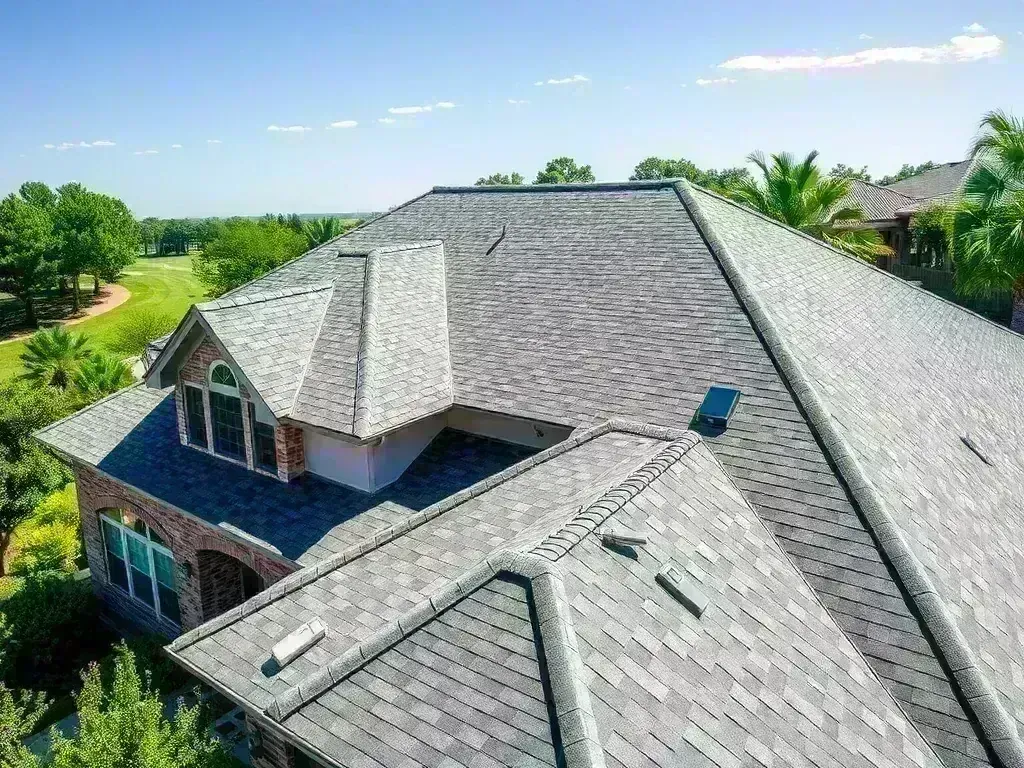
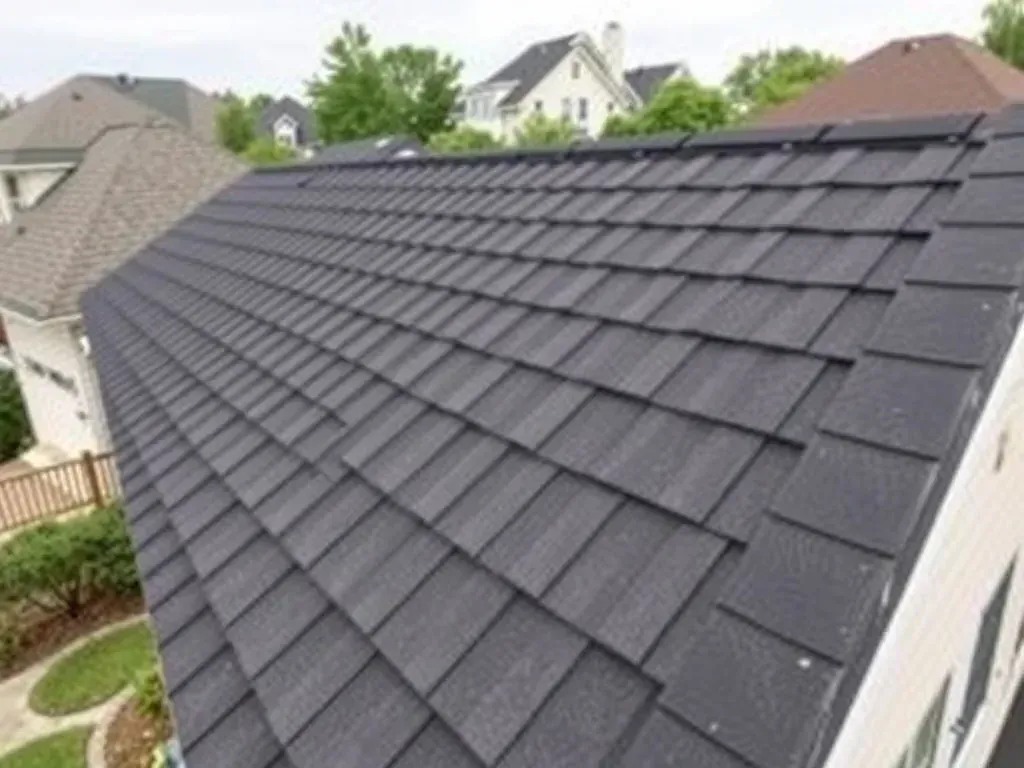
Gutter work is roof work, so our roofers run a roof inspection from the ground up before quoting and hand you a written estimate with counts line by line.
- Roof deck and sheathing get probed with a pry bar, because soft plywood or OSB will not hold a hanger or a nail for long.
- Synthetic underlayment and an ice-and-water shield at the eave stop ice dams from backing meltwater under the field shingles.
- Drip edge, rake trim, and the starter course along the verge are reset so runoff lands in the channel instead of behind it.
- Step flashing, counter-flashing, and chimney flashing get resealed with roof cement or mastic wherever a wall or a stack interrupts the roofline.
- Pipe boots and vent flashing crack before the shingles do, and a split vent boot sends water straight down the eave and into the fascia.
- A ridge vent working with soffit vents and, on some attics, an attic fan keeps the deck dry from underneath and trims summer cooling costs.
- Valleys, hips, gables, dormers, skylights, and a porch awning or canopy each break the plane, so each one needs its own flashing detail.
- Flat sections behind a mansard or gambrel need membrane work, usually TPO, EPDM, a PVC membrane, or a torch-applied modified bitumen cap sheet.
- Tile, clay tile, and concrete tile shed water differently than a standing-seam panel or a corrugated panel, so hanger spacing changes with the system.
- Wood shake, cedar shake, and slate are heavy, so we check the rafter, joist, truss, purlin, and ridge beam before adding weight or walking the decking.
- Parapet walls, coping, and a scupper on a flat rooftop get a fresh coating and caulk or adhesive at every seam we can reach.
- Batten and counterbatten framing behind a metal panel roof is what lets the assembly drain and dry from underneath.
- Old roofing felt and tar paper come up in your hand on most three-tab shingle roofs, and a synthetic underlayment replacing them outlasts the old course.
- Ridge cap shingles get reused only if they still lay flat, so on an older architectural shingle roof we usually renew them with the vent work.
- Decking and the substrate under a low-slope roof have to be dry and sound before any coating or membrane goes down, or it peels within a year.
- Tar, bitumen, and pitch still seal plenty of older flat roofs, and sometimes a recoat is the right answer instead of a full tear-off.
- Snow guards on a north slope, anchor points for a safety harness, and a vapor barrier over the insulation are standard on coastal work.
Watch for these signs before the next downpour finds them for you.
- Water in the basement after a hard rain usually means a downspout is dumping at the foundation instead of past it.
- Fascia boards that feel spongy or show peeling paint point to a gutter that has been overflowing and wicking backward for months.
- Ruts in the lawn, exposed roots, and eroding mulch under one corner are the landscaping version of the same message.
- Granule loss from an aging shingle roof fills the trough with grit, which is why a run that is only a few years old can still sag.
- A mildew stripe on the siding or paint flaking off the soffit says water is sitting where ventilation should be moving air.
- Ice dams forming at the eave every February mean the bottom edge of the roof deck is warm, not that the gutters are at fault.
Call Middletown Roofing Pros at 732-419-1350 for a free estimate from a licensed and insured roofing contractor.