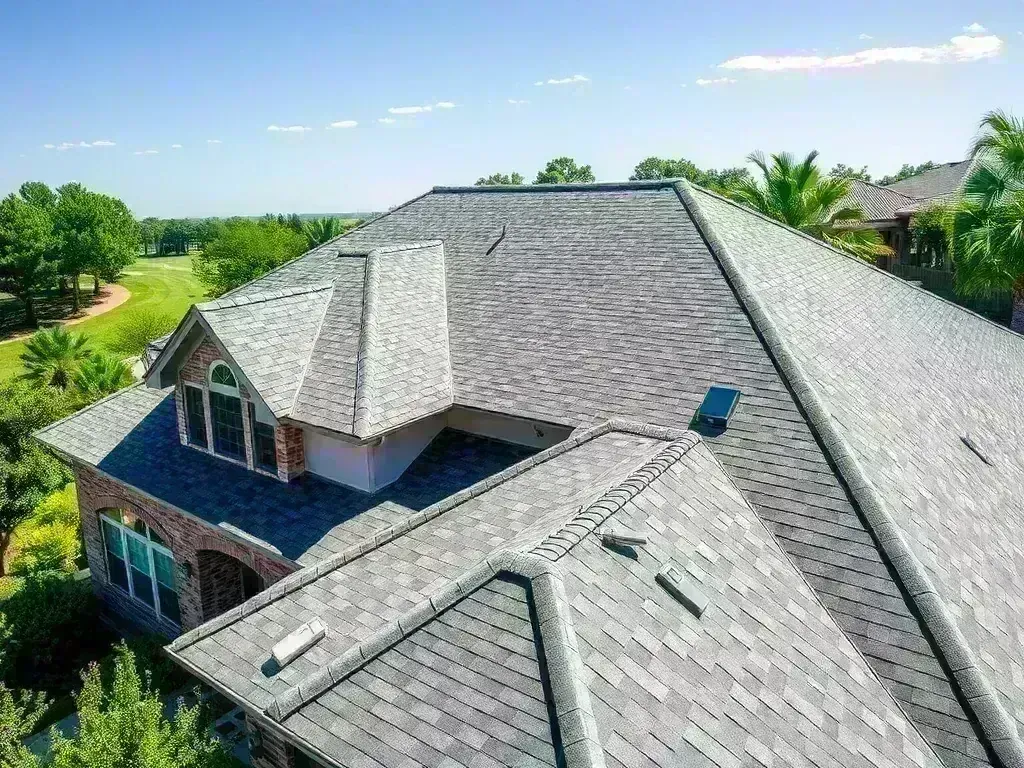
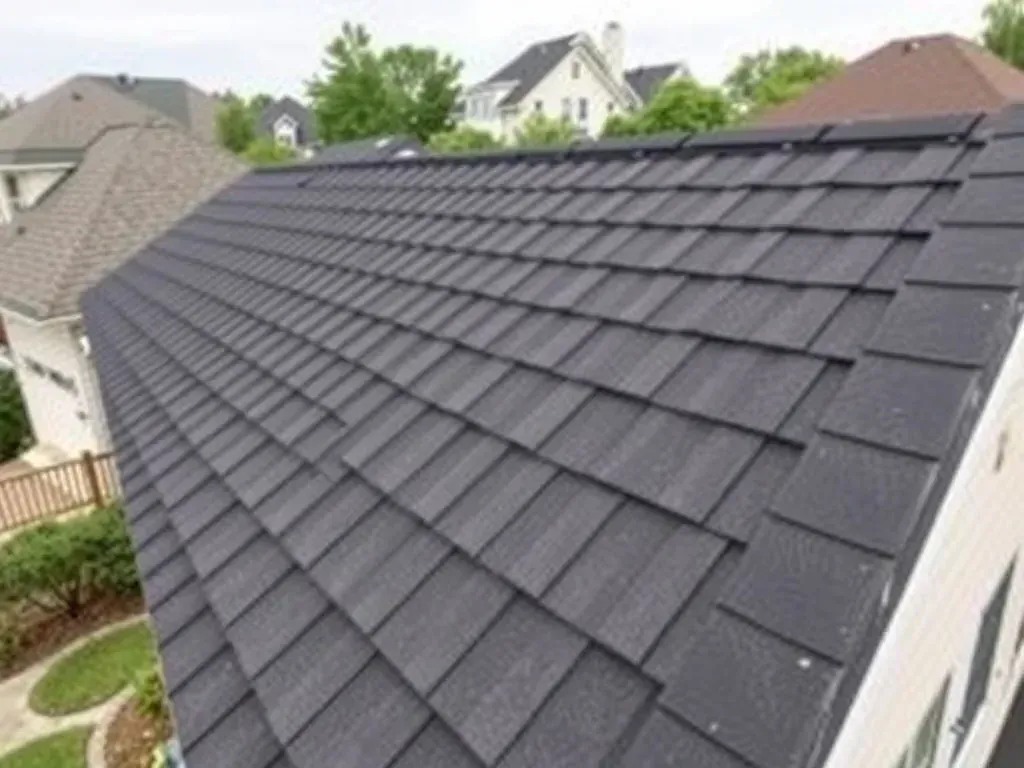
Commercial roofing is the design, installation, and maintenance of low-slope membrane systems on flat and nearly flat buildings. A property manager usually calls us after a tenant reports a ceiling stain or the rooftop starts holding water after a storm.
Our crews handle system selection, tenant coordination, and code compliance, from the first roof inspection through the final warranty paperwork. We are licensed and insured, and the roofer who quotes your job is the one who walks it with the crew.
Low-Slope Roofing Systems We Install and When Each One Fits
System selection drives everything else, because a membrane that performs well on one building can fail early on another. We match the sheet to the structure, the occupancy, and the warranty term you actually need.
- TPO membrane is a light-reflecting single-ply sheet with heat-welded seams, and it suits buildings where summer cooling load matters most.
- EPDM is a rubber membrane that has shrugged off ultraviolet exposure and salt air for decades on rooftops near the water.
- PVC membrane resists kitchen grease and chemical exhaust, so it fits restaurants and buildings with heavy rooftop venting.
- Modified bitumen is an asphalt-based cap sheet we install by torch or as a self-adhered layer over a sound substrate.
- Built-up roof assemblies laminate roofing felt and bitumen in alternating plies, and they still perform on older flat decks.
- Metal panel and standing-seam panel systems handle long runs, snow guard placement, and low slopes without seams to leak.
- Roof coating over an intact membrane adds a waterproofing layer and buys years before a full roof replacement.
Membrane materials from Carlisle SynTec, GAF EverGuard, Firestone, Johns Manville, and Versico all carry manufacturer terms in the 15-to-30-year range when they go down to spec. We put the warranty in writing before the first load of material lands.
Warning Signs a Commercial Roof Is Failing
A roof rarely announces itself. Water seeps, wicks along the deck, and shows up two floors from the actual breach. Here is what we look for on the first walk.
- Membrane blisters and splits appear when trapped moisture expands in summer heat and pushes the sheet off the substrate.
- Ponding water that lingers past 48 hours points to a blocked scupper, a clogged downspout, or a deck that has settled.
- Parapet and counter-flashing pull away from the wall, letting water wick behind the masonry and soak the insulation.
- Rust, corrosion, and loose fasteners on a metal panel mean the seams are opening and screw heads have backed out.
- Granule loss and alligatoring on a modified bitumen cap sheet signal end-of-life wear rather than a repairable surface.
- Interior stains, a mold smell, or bubbling paint after a Nor'easter point to a systemic leak, not a single drip.
- Sagging between joists or rafters suggests saturated insulation and rotted decking underneath the assembly.
- A rooftop HVAC curb that has peeled away from its mastic seal is a slow leak most property managers miss.
Our Commercial Roofing Process, Step by Step
Every job follows the same sequence, whether we are mending one detail or refitting a whole rooftop. Skipping a step is how a warranty gets voided.
- A roof asset survey documents the membrane, flashing condition, moisture content, and deck soundness before we quote anything.
- We deliver a line-item roof estimate that separates repair work from replacement so you can compare options honestly.
- Crews set scaffold, tie off on an anchor point, and wear a safety harness for every minute above the parapet.
- We choose between a tear-off and a recover, and we overlay only when the substrate passes inspection.
- Damaged purlin, batten, or counterbatten comes out, and we replace the plywood or OSB sheathing before anything covers it.
- Insulation and a vapor barrier go down to meet the building code requirement for thermal performance.
- The membrane or metal panel is laid in staggered courses, hand-sealed at the laps, and fastened on the specified pattern.
- Detail work seals the vent boot, pipe flashing, drip edge, skylight curb, and chimney flashing before the crew leaves.
- We close with a roof inspection, a debris sweep, and a dumpster pull, then hand over the warranty documents.
What Moves the Price on a Commercial Roofing Project
A recover costs less than a tear-off because we are not stripping down to the deck. Everything else in the number comes from the building itself, and we show you which line does what.
- Square footage and the total roofing squares drive material and labor on every quote.
- Roof pitch, curbs, and penetrations add detailing hours that a flat open field never needs.
- Deck condition decides whether we can overlay or must replace rotted sheathing first.
- Insulation thickness chosen for code compliance changes the material line on the estimate.
- Site access matters, since a tight lot means a crane, a conveyor, or a longer debris haul.
- Tenant coordination and after-hours scheduling add labor cost on occupied buildings.
Maintenance, Energy Efficiency, and Materials Built for This Climate
Humid summers and storm rain punish a flat roof faster than most owners expect. Roof maintenance and the right coating can add real years to the assembly.
- Twice-a-year roof maintenance clears drains, reseals mastic joints, and catches a crack before it becomes a wet ceiling tile.
- Reflective white TPO or a cool roof coating lowers surface temperature and cuts summer cooling demand on the top floor.
- Added insulation and roof ventilation reduce heat gain and stop condensation forming on the underside of the deck.
- Green roofing and rooftop planters absorb stormwater and shade the membrane, though they need a structural review first.
- Recycling tear-off asphalt and concrete keeps debris out of the dumpster and weight off the landfill.
- Thermal imaging and moisture meters are the roofing technology we use to find saturated insulation without cutting the roof open.
Storm Damage, Insurance Claims, and the Residential Work We Also Handle
After a hard storm we photograph the damage, measure it, and write a scope before anything gets touched. That file is what an adjuster needs to approve the work.
We walk the property with the adjuster, file a supplemental claim when the scope missed soaked insulation, and track the claim deadline so nothing lapses. You sign the proof of loss form; we supply the technical language.
Flat roofs are not the whole job. We also take on residential roofing, including steep-slope sections where a completely different set of components fails.
- Asphalt shingle, three-tab shingle, and architectural shingle cover most houses, and each one ages at a different rate.
- Wood shake and cedar shake look right on older homes but need cleaning so rot does not take hold in humid weather.
- Slate, tile, clay tile, and concrete tile last decades but need a roofer who can walk them without cracking the field.
- Standing-seam and corrugated panel serve porch roofs, canopies, awnings, and garage overhangs where pitch is minimal.
- Starter course, field course, and staggered courses keep shingle edges from lifting in coastal wind.
- Ring-shank nails hold better than smooth nails on older decking, especially where the wood has dried out.
- Ridge cap and ridge vent close the peak while soffit vent and an attic fan keep air moving through the attic.
- Valley flashing, apron flashing, and boot flashing carry water around the awkward spots where most leaks start.
- Ice-and-water shield along the eave stops meltwater from backing up under the shingles in February.
- Synthetic underlayment has largely replaced tar paper and roofing felt as the secondary water barrier.
- Gutter installation and downspout work move runoff away from the fascia and foundation instead of letting it pool.
- Skylight, dormer, and chimney areas get individual attention because leaks cluster at transitions.
Roof shape changes the plan too. A hip, gable, or mansard drains fast, while a gambrel or dormer adds transitions that need their own flashing, and rake, verge, and overhang trim at the gable end usually needs resealing before the fascia behind it rots. Coping caps the parapet wall, and once that seal fails, weatherproofing the wall below turns into a masonry job.
The tools are not glamorous. A roofing square, a pry bar, a roofing shovel, and a nail gun running off an air compressor do most of the work, and a torch only comes out for modified bitumen. Ladders, sealant, caulk, adhesive, and roof cement stay on the truck for detail work.
Winter brings its own calls. Ice dam removal is something we handle when meltwater backs up behind the eave, and we will not steam ice off a roof without checking what is underneath first. Ice dams form fast along the Navesink River and Sandy Hook Bay when a warm attic meets a cold roof deck.
Choosing a Roofing Contractor for a Commercial Building
Ask any roofing contractor three questions before you sign. Who performs the work, what the warranty covers, and what happens if a leak shows up in year two. We answer all three in writing.
- Free roof estimates are written line by line, never delivered as one number over the phone.
- Our workmanship guarantee and the manufacturer warranty are both explained before day one.
- Customer satisfaction on this side of the business usually shows up as a renewal, not a review.
If what you actually need is a roof repair rather than a roof replacement, we will say so and quote it that way. Call Middletown Roofing Pros at 732-419-1350 and we will get a set of eyes on the building this week.